Should I stay or should I go? Navigating evacuation decisions in the Middle East
Editor

On 28 February, the US and Israel launched large‑scale airstrikes on Iran, triggering retaliatory attacks by Iran against its regional neighbours, and rapidly degrading the security environment across the Middle East. S-RM’s Crisis Response team recorded a 100 percent increase in calls for assistance over the first two weeks of the conflict, compared with the 12‑day escalation between Israel and Iran in June 2025. Decision-making challenges and urgency accelerated for companies, travellers and expatriate communities weighing whether to stay or how to depart amid abrupt airspace closures and airline disruptions, suspended embassy services, online dis- and misinformation, and heightened uncertainty over the trajectory of the conflict.
Timing is everything
In the immediate aftermath of Iran’s regional strikes, individuals and organisations faced pressing choices over whether to shelter in place, as advised by several regional governments, or to leave while options were still available, following guidance from countries such as the US, UK, and Canada. The Head of S-RM Crisis Response, Pete Doherty, notes that these decisions are often complicated by clients’ concerns over how the conflict might (de)escalate, alongside indecision driven by cost considerations or hope for stabilisation.
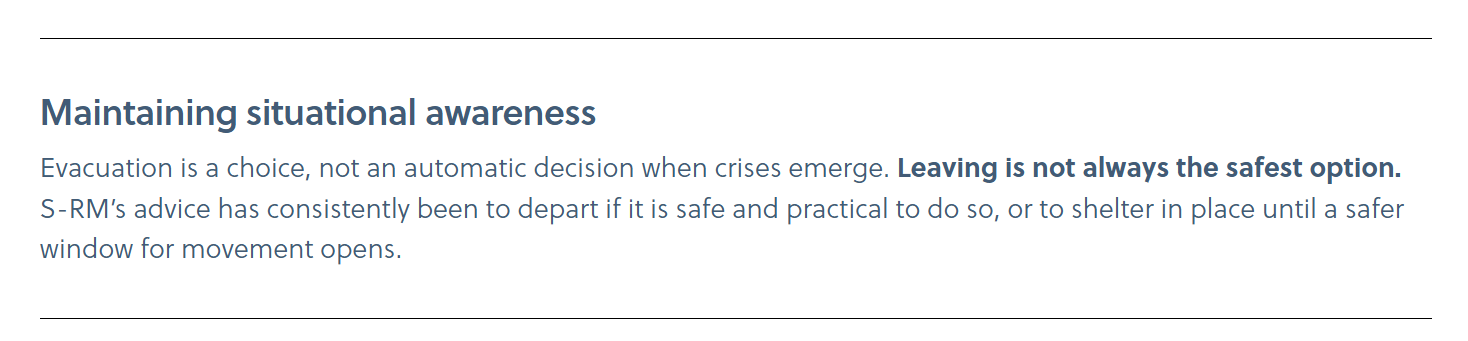
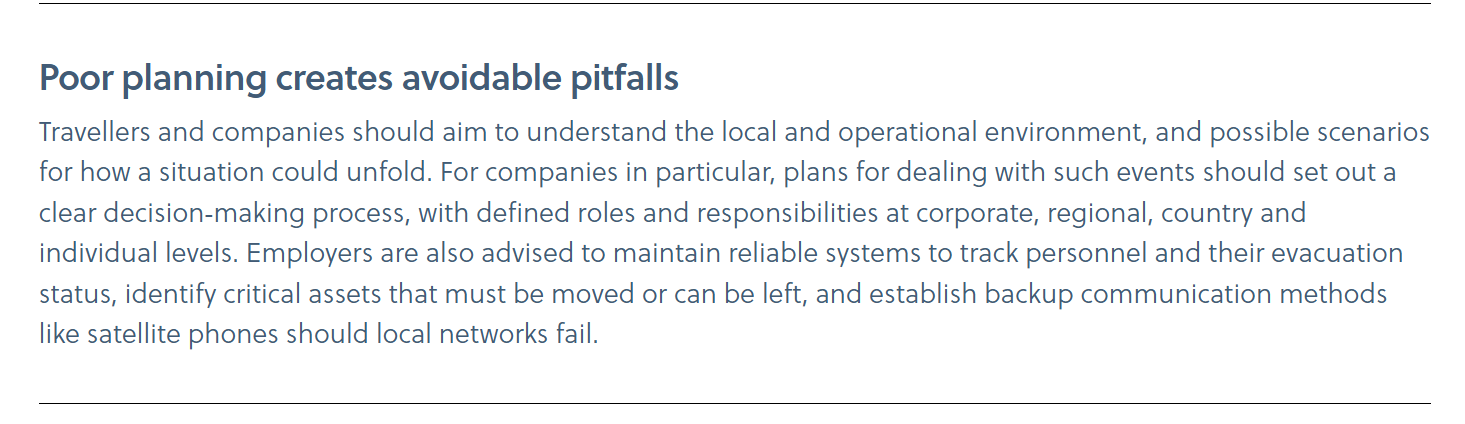
Doherty observes that a recurring challenge for many organisations lay in having no pre‑agreed evacuation plan with defined triggers to assess when evacuations should occur, and limited support arrangements for in-country personnel. Out‑of‑date or overly‑complex crisis plans, or the absence of any plan or clear triggers for critical choices – such as when an evacuation is necessary – can foster uncertainty and indecision when crises emerge, leaving staff to improvise under pressure. Unclear plans can lead to an over‑reliance on governments and embassies, slow down decision making, and limit flexibility in choosing evacuation options.
Travel uncertainty
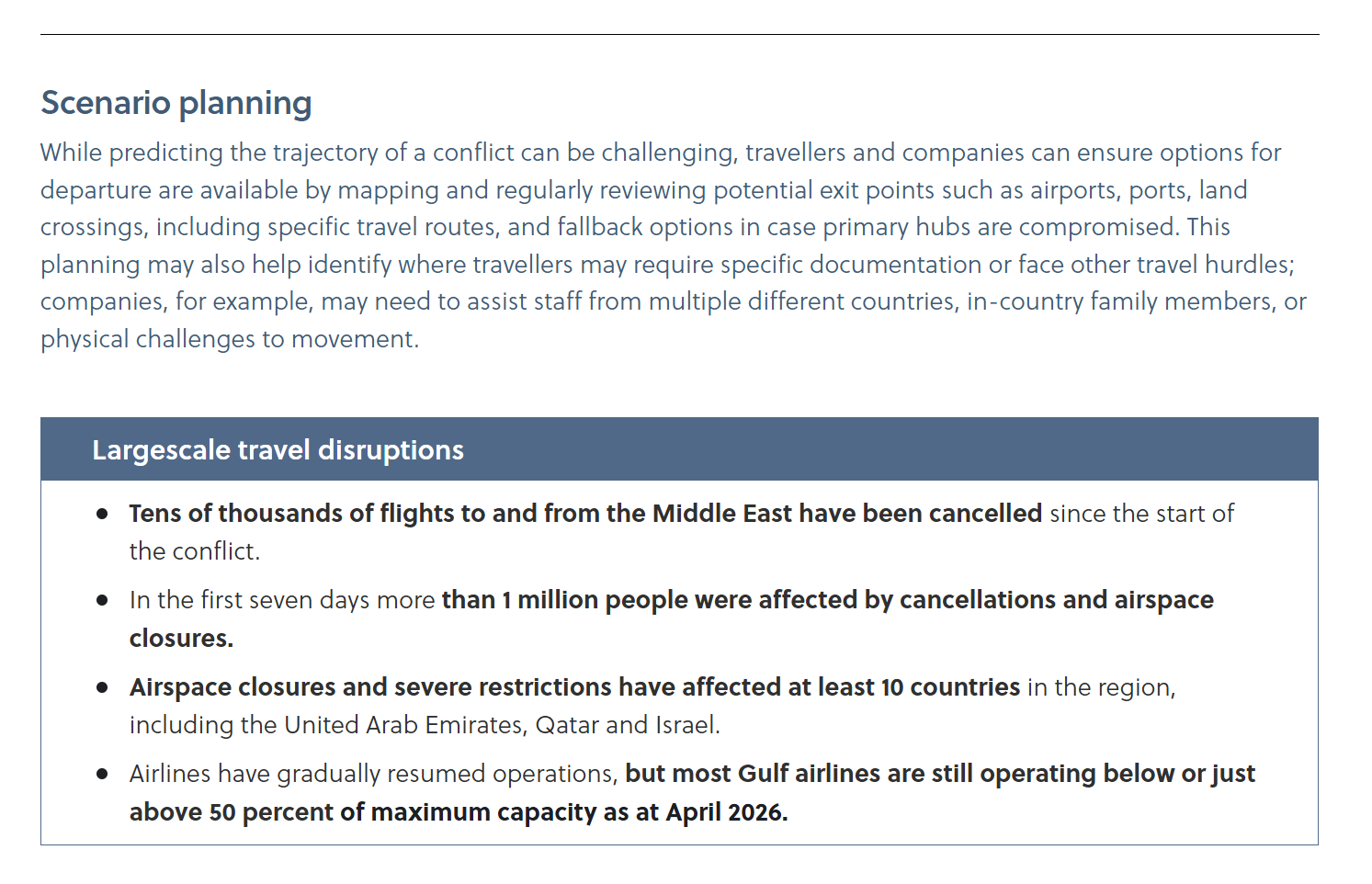
For those opting to leave, a major challenge lay in identifying viable exit routes. Airspace closures across Iran, Israel and multiple Gulf states – particularly hubs such as Dubai, Abu Dhabi and Doha, which had experienced abrupt airspace closures and infrastructure damage – followed within minutes of the initial strikes, making overland travel to neighbouring countries with open airspace the primary alternative. Land borders quickly became congested: major crossings such as Hatta, between the UAE and Oman, saw heavy flows of travellers and heightened document checks, while airports in locations such as Muscat emerged as key departure points, but with limited capacity and rapidly shifting schedules.
S-RM’s Crisis Response team recorded a 100 percent increase in calls for assistance over the first two weeks of the conflict, compared with the 12‑day escalation between Israel and Iran in June 2025.
Information gaps
As Iranian strikes expanded, many embassies reduced in‑person services, suspended routine appointments, or shut operations, leaving travellers unsure of where to obtain emergency documents, guidance and travel support. Ambiguity around visa permissions, transit rights and documentation requirements to travel across borders further complicated decision‑making, with some individuals relying on alternative routes without clear assurance of entry.
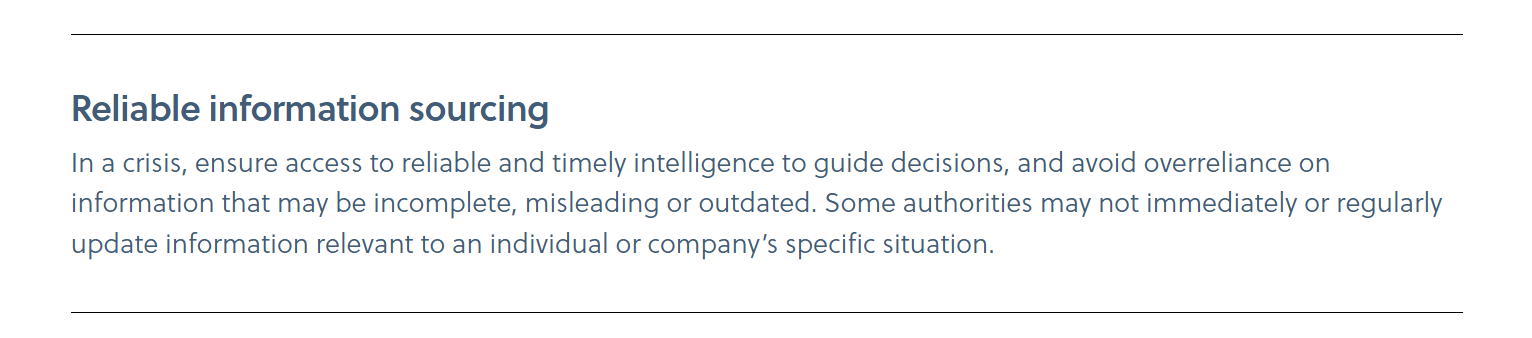
Amid this uncertainty, online forums became key informal sources of real‑time updates on issues such as border conditions and flight availability, but also amplified rumours and misinformation; for example, some social media users erroneously claimed that the UAE-Oman Hatta border only permitted GCC residents. In mid-March, social‑media posts circulated by Iranian profiles alleging imminent Iranian strikes on parts of Dubai – reportedly based on unverified “military warnings” – also generated significant concern among residents and businesses despite no attacks materialising.
Peace of mind
Unlike more concentrated areas of conflict like Ukraine in February 2022, the recent escalation in the Middle East has been notable for its rapid and highly disruptive impact on a region-wide scale, highlighting the value in proactive crisis preparedness even in traditionally low-risk travel environments. Planning and preparation can ease the burden of making high‑stakes stay-or-go decisions under these conditions, reducing challenges associated with volatile developments, limited travel options and incomplete or contradictory information, both as the Middle East conflict persists, and amid potential longer-term volatility in the region.